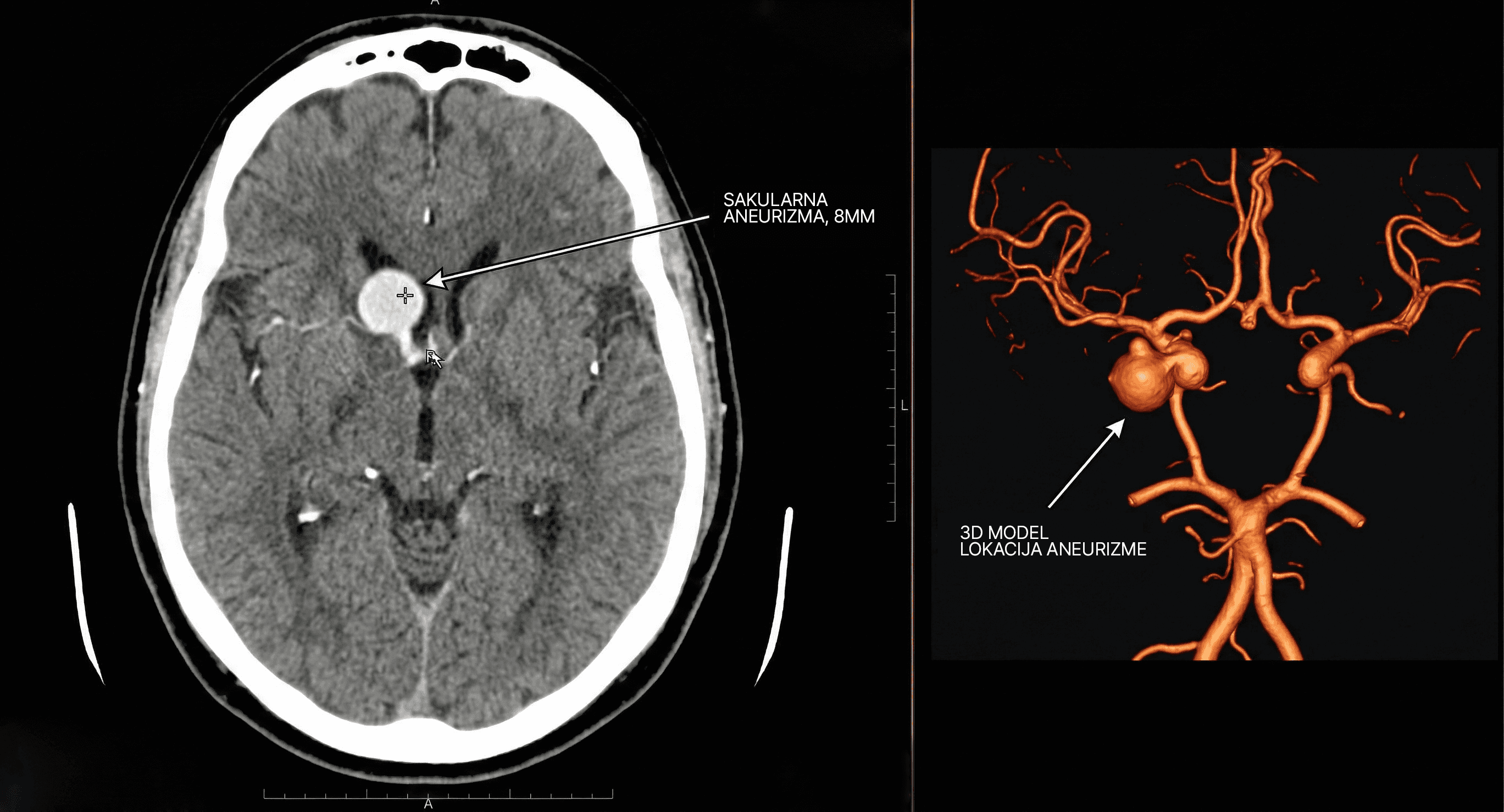
Diabetes and Stroke: How Blood Sugar Affects the Brain's Blood Vessels
You have been taking blood sugar medication for twelve years. You feel well, so you perceive diabetes merely as a number on a lab report checked once every three months. Then, during a routine checkup, your doctor tells you that it is not just your blood sugar that is a concern, but your blood vessels as well.
The link between diabetes and stroke develops silently over the years and typically causes no symptoms. Diabetes approximately doubles the risk of stroke. The good news is that a significant portion of that risk can be managed, provided you know what to monitor.

How Much Diabetes Increases the Risk of Stroke
The largest analysis on this topic, published in the journal The Lancet in 2010, included nearly 700,000 individuals across 102 studies. People with diabetes had:
about a 2.3 times higher risk of ischemic stroke (blockage of a blood vessel)
about a 1.6 times higher risk of hemorrhagic stroke (bleeding in the brain)
These figures were calculated by accounting for age, sex, smoking status, blood pressure, and body mass. The National Institute of Diabetes and Digestive and Kidney Diseases (NIDDK) puts it more simply: adults with diabetes are nearly twice as likely to develop heart disease or have a stroke.
This applies not only to those who have already been diagnosed with diabetes. A review of studies published in the BMJ showed that prediabetes, depending on certain definitions, also carries a slightly increased risk of approximately 20 to 25%.
How Blood Sugar Affects the Blood Vessels of the Brain
Over time, elevated blood sugar damages blood vessels and the nerves that control them. In the blood vessels of the brain, this occurs in several ways:
Impaired function of the blood vessel wall. The inner lining of the blood vessel (endothelium) dilates with greater difficulty and inflames more easily. This is where the formation of fatty deposits, known as atherosclerosis, begins.
Major blood vessels narrow and stiffen. Blood flow is restricted, and a clot can form on these deposits, blocking the blood vessel.
Small blood vessels deep within the brain are also damaged. Consequently, lacunar strokes—small strokes occurring in these tiny blood vessels—are more common in people with diabetes.
Blood clots form more readily. In the presence of high blood sugar, platelets adhere more easily to one another and to the vessel wall.
Blood Pressure Is Often as Critical as Blood Sugar
The Centers for Disease Control and Prevention (CDC) states that high blood pressure, which is common in people with diabetes, is a primary reason their risk of stroke is elevated. Therefore, well-controlled blood sugar does not mean blood pressure can be overlooked.


Stroke in People with Diabetes: Why the Outcome Can Be More Severe
Diabetes is associated with poorer recovery and higher mortality rates following a stroke, particularly an ischemic stroke. Elevated blood glucose upon arrival at the hospital is linked to greater brain damage and worse clinical outcomes. For this reason, physicians measure blood sugar levels upon admission and monitor them throughout treatment.
High blood sugar during the initial hours can also occur in individuals who are unaware that they have diabetes. If you are informed of this while hospitalized, consult your physician after discharge regarding whether and how you should have your blood sugar evaluated.
What Can Reduce the Risk
The NIDDK advises people with diabetes to manage four key factors. You should determine your target values in consultation with your doctor, as these targets vary from person to person.
Average blood sugar (HbA1c): This test reflects your average blood glucose level over the past two to three months. For many individuals, the target is below 7%, although a slightly higher target may be appropriate for some.
Blood pressure: For most people with diabetes, the target is below 140/90 mmHg, though your physician may recommend a lower level. Monitor your blood pressure at home and keep a record of your readings.
Cholesterol: Ask your doctor about your cholesterol levels and whether you require cholesterol-lowering medication. Individuals with diabetes over the age of 40 may benefit from such treatment.
Smoking: Quitting smoking significantly reduces the risk of both stroke and heart attack.
Physical activity is also beneficial. The World Health Organization recommends that adults engage in at least 150 minutes of moderate-intensity physical activity per week, such as a 30-minute brisk walk five days a week. Any amount of activity is better than none. A diet low in ultra-processed foods, maintaining a healthy body weight, and getting adequate sleep are equally important.
Take your prescribed medications regularly, even when you feel well. Do not begin taking aspirin on your own initiative; consult your physician to determine whether it is appropriate for you.
How to Recognize a Stroke
A stroke occurs suddenly and is typically painless. Remember these four key indicators:
Face: Ask the person to smile. Does one side of the face droop?
Arms: Ask the person to raise both arms. Does one arm drift downward?
Speech: Ask the person to repeat a simple phrase. Is their speech slurred or strange?
Time: Note the time and call emergency medical services immediately.
Other possible warning signs include sudden weakness or numbness on one side of the body, blurred vision, loss of balance, and a sudden, severe headache.
Low Blood Sugar Can Mimic a Stroke
In individuals with diabetes—particularly those treated with insulin or certain oral medications—severely low blood sugar (hypoglycemia) can cause confusion, slurred speech, and, less commonly, weakness on one side of the body. Even in these circumstances, do not attempt to evaluate the condition on your own. Call emergency services immediately and inform the dispatcher that the person has diabetes. If a glucometer is readily available, check the blood glucose level while waiting for emergency responders and report the result to the medical team, but do not delay calling emergency services to do so.

Frequently Asked Questions
Does diabetes cause a stroke?
Diabetes is not the sole cause, but it approximately doubles the risk. Elevated blood sugar damages blood vessels over the years, and it is frequently accompanied by high blood pressure and elevated cholesterol.
Can high blood sugar cause a stroke?
Long-term elevated blood sugar damages blood vessels, thereby increasing the risk. There is no single blood sugar level at which a stroke is guaranteed to occur. For this reason, average blood sugar levels are monitored rather than just individual readings.
What blood sugar level is dangerous for a stroke?
There is no single threshold. An HbA1c test reflects long-term blood sugar control, and target levels are determined by a physician. For many individuals, this target is below 7%.
Can a stroke cause an increase in blood sugar?
Yes. Elevated blood sugar upon hospital admission is also observed in individuals without a prior diagnosis of diabetes. After discharge, consult your doctor regarding whether your blood sugar needs further testing.
How can I tell the difference between low blood sugar and a stroke?
You cannot reliably distinguish between them at home. Call emergency services (194), inform them that the person has diabetes, and, if possible, check their blood sugar while waiting for help to arrive.
Does prediabetes increase the risk of a stroke?
In certain forms of prediabetes, the risk is slightly increased. This serves as an opportune time to consult your doctor and have both your blood pressure and cholesterol evaluated.
This text is intended for informational purposes only and does not substitute for professional medical evaluation. If you suspect someone is having a stroke, immediately call emergency medical services at 194.
Sources